A Night Under October Skies: Planets, Nebulae and a Distant Galaxy
Sometimes an evening of astronomy turns into something much more productive than originally planned. That was certainly the case during my observing session this past weekend here in Harford County, Maryland.
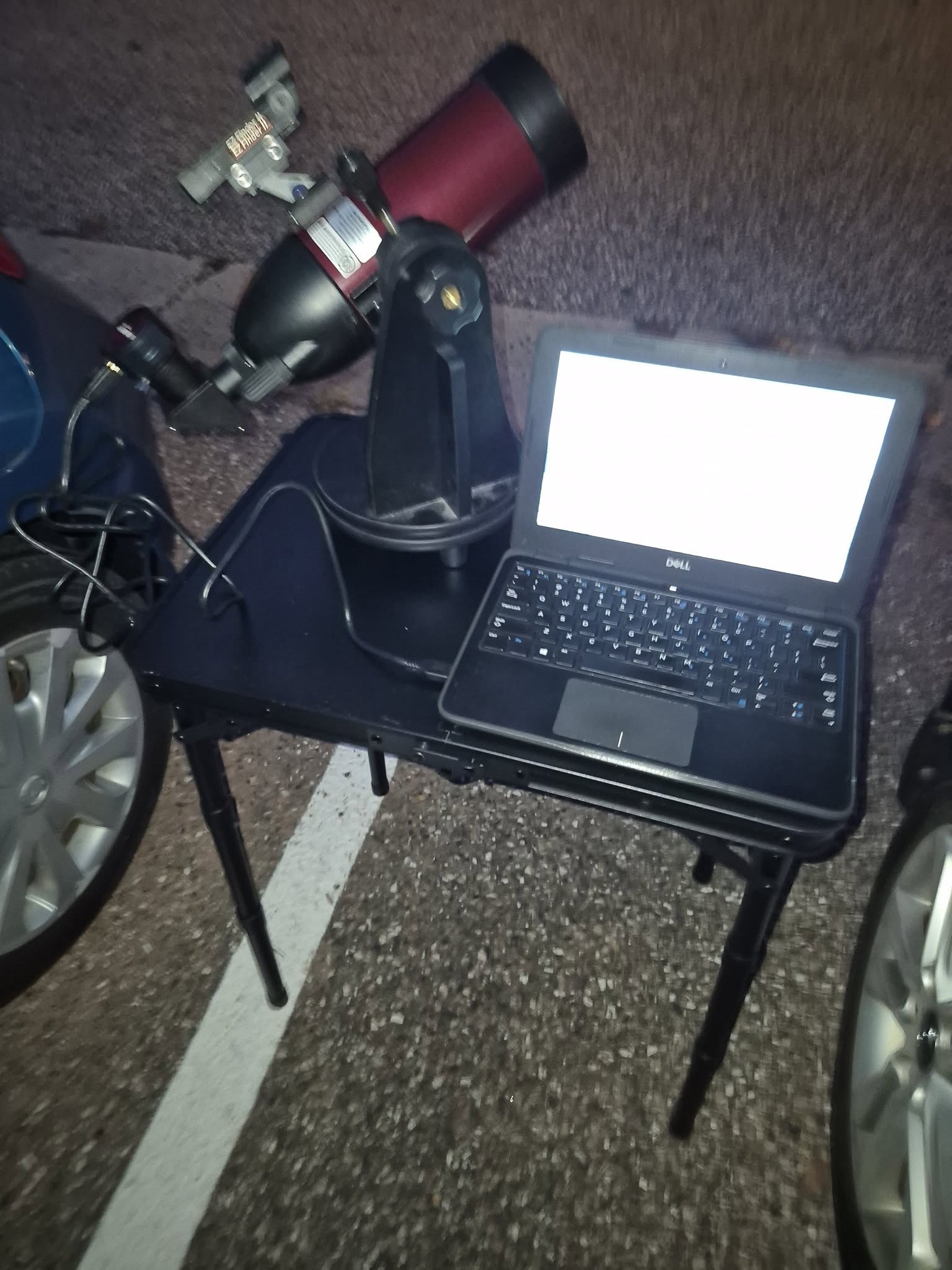
Armed with my Dwarf Mini smart telescope, a refractor telescope, and an SVBONY planetary camera, I spent much of the night photographing and observing objects throughout the October sky. By the time I finished, I had collected approximately ten worthwhile astronomical photographs, encountered a few technical challenges, and gained valuable experience using my equipment.
The night included everything from familiar planets to nebulae and a galaxy whose light began its journey toward Earth millions of years ago.
Beginning with the Moon
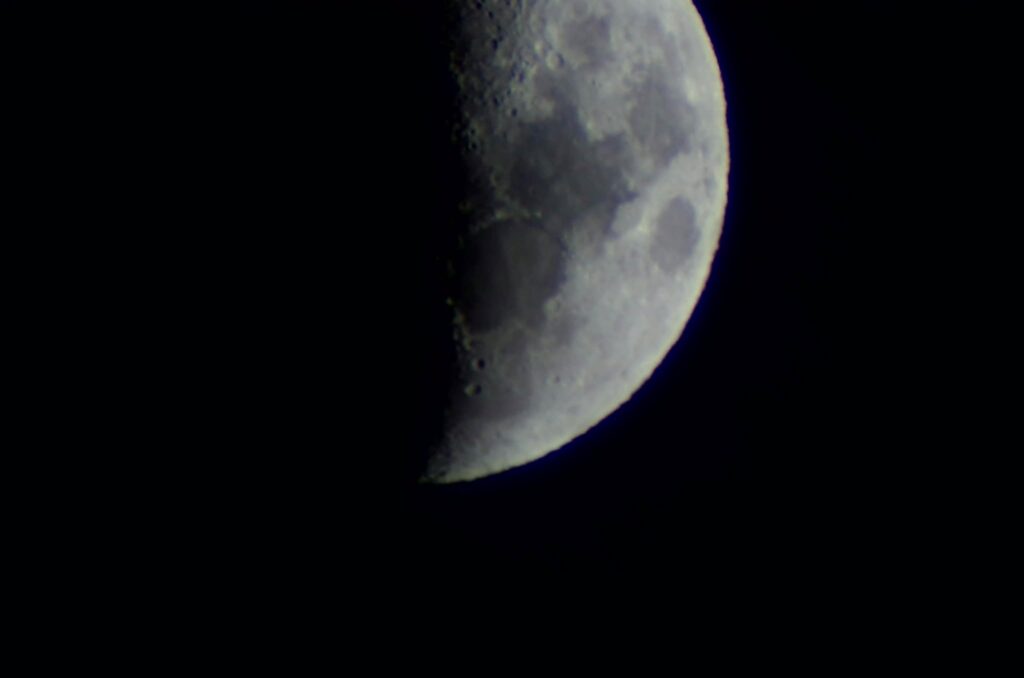
My observing session began with the Moon, using my refractor telescope and SVBONY planetary camera.
One of my objectives was to become more familiar with photographing the lunar surface. The Moon is an excellent subject because its craters, mountains, and dark volcanic plains provide opportunities to study both astronomy and geology.
Getting the camera adjusted proved challenging. Exposure, brightness, gain, and focus all needed attention. I experimented with the camera settings and used SharpCap to help manage the imaging process.
One lesson I learned was that locating an object visually before attaching the camera makes the process much easier. I used a 10 mm eyepiece to locate and center my target before replacing it with the camera.
Although I have both 2× and 5× Barlow lenses available, I decided to begin without additional magnification. There is little benefit in increasing magnification until the camera and telescope are properly focused.
The session produced some satisfying lunar photographs and gave me more experience with planetary imaging.
Exploring the Deep Sky
NGC 7331 – A Galaxy Far Beyond Our Own
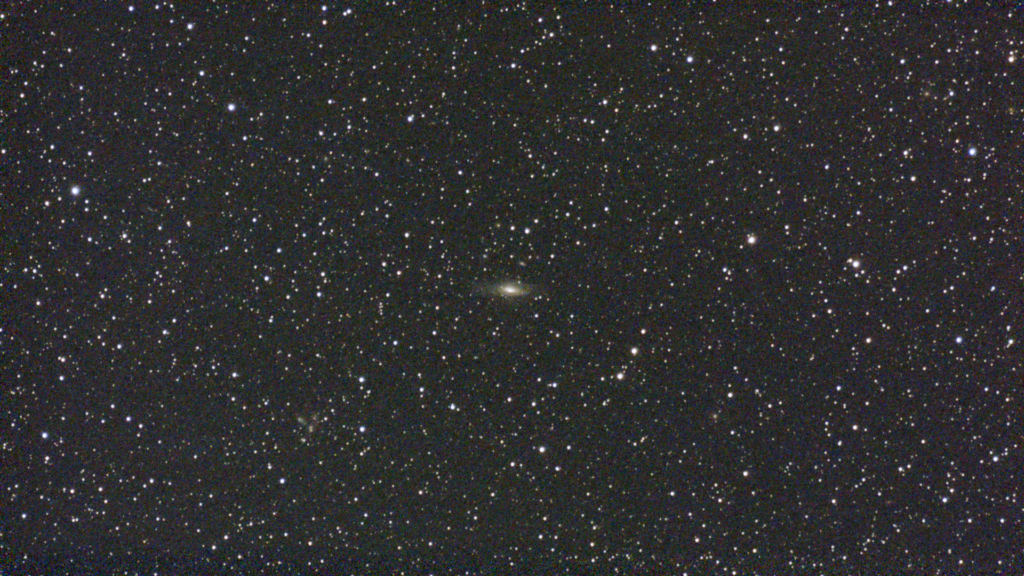
One of the more interesting objects I photographed was NGC 7331, a spiral galaxy in the constellation Pegasus.
Located approximately 44 million light-years from Earth, this galaxy provides a remarkable example of the distances involved in astronomy. The light captured by my telescope began traveling toward Earth roughly 50 million years ago, long before humans existed.
Although the galaxy appeared relatively small in my photograph, knowing what I was observing made the experience worthwhile.
The California Nebula – NGC 1499
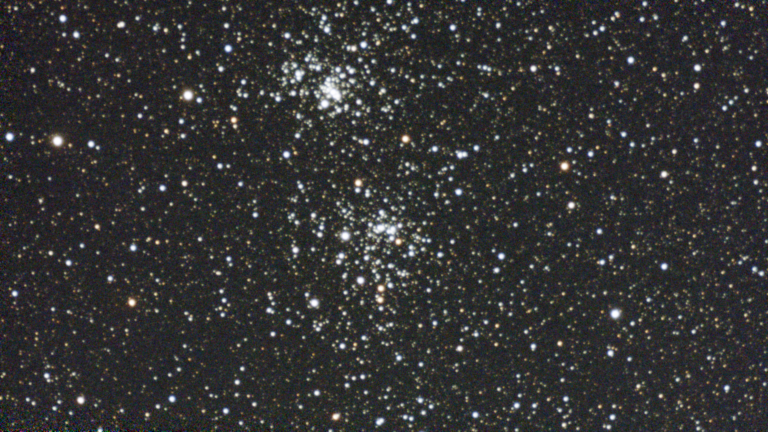
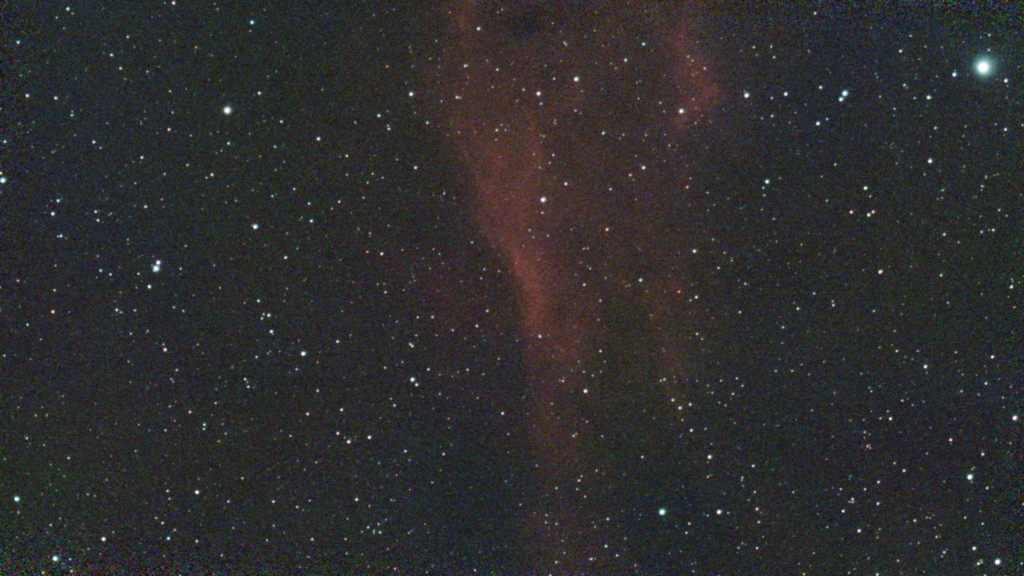
Another target was the California Nebula in the constellation Perseus. This emission nebula is approximately 1,000 light-years from Earth. Its distinctive shape resembles the outline of California, giving the nebula its familiar name.
The California Nebula is challenging to photograph because its light is spread across a large area of the sky. Light pollution makes capturing its faint reddish glow even more difficult. Nevertheless, I was able to collect an image and add another deep-sky object to my growing collection.
The Pleiades – M45
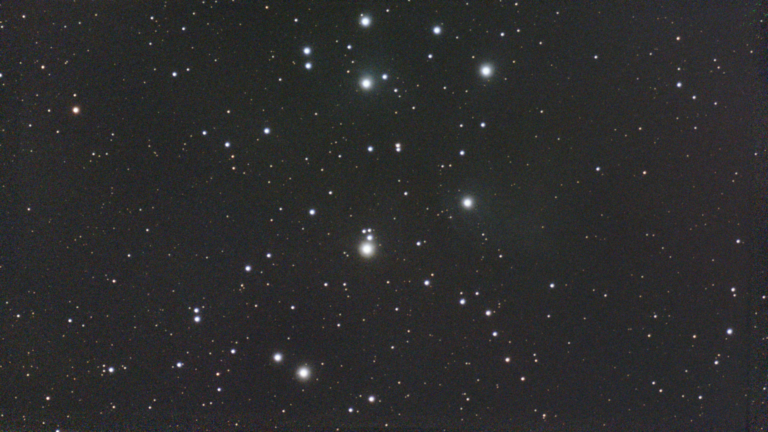
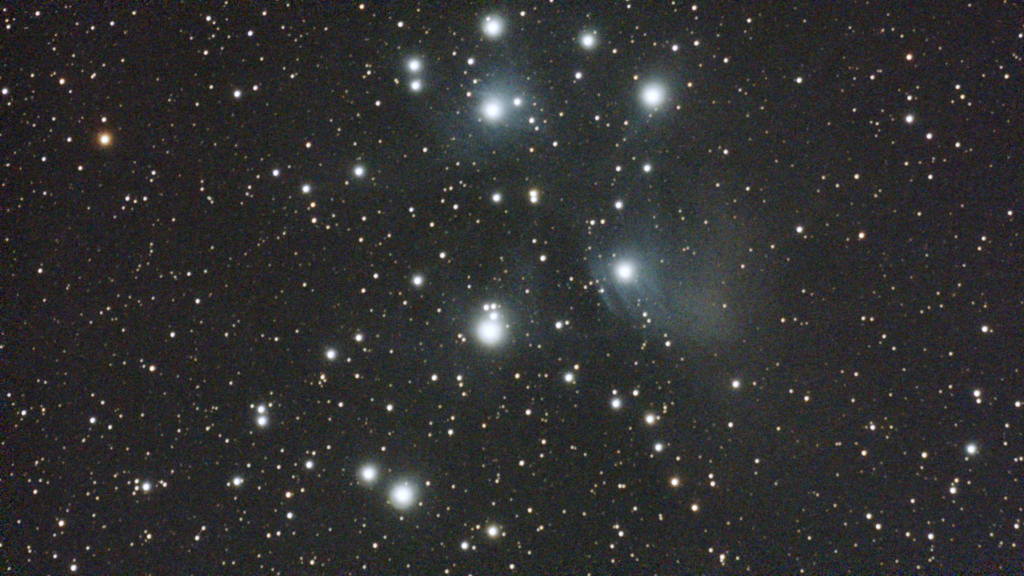
I also spent time photographing the Pleiades, commonly known as the Seven Sisters. Located in the constellation Taurus, this open star cluster is approximately 440 light-years away.
The Pleiades are easily visible to the unaided eye under favorable conditions. Through a telescope, the brilliant blue stars make an attractive photographic subject. It was a welcome opportunity to photograph something different while waiting for other objects to move into better observing positions.
The Planets: Uranus, Neptune, and Jupiter
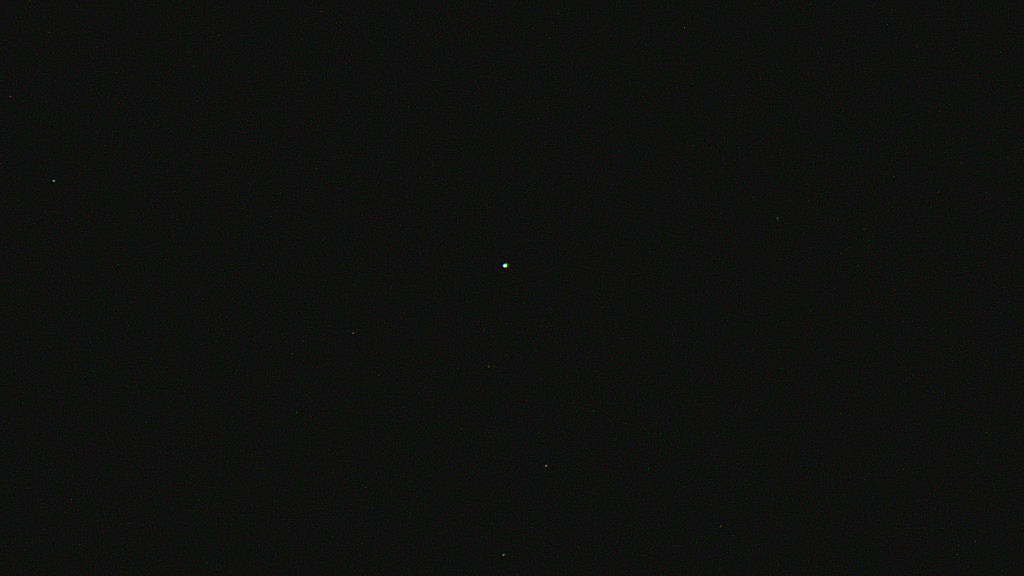
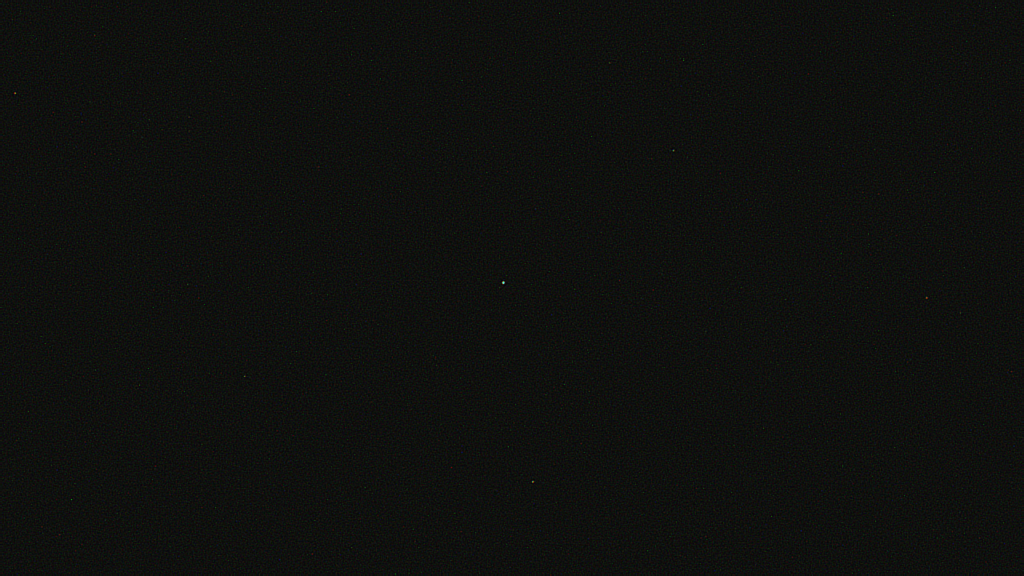
One of the highlights of the night was successfully photographing Uranus and obtaining what I believe was an image of Neptune.
Uranus is approximately 1.8 billion miles from the Sun, while Neptune orbits at a distance of roughly 2.8 billion miles. These distances make observing the outer planets an interesting challenge, especially with relatively small telescopes.
Neptune was particularly difficult. My Dwarf telescope would not stack the exposures, so I had to settle for a single image. Looking closely at the photograph, I could see what appeared to be a faint bluish tint in a small point of light. Although the image does not show a planetary disk in detail, capturing a possible image of Neptune was satisfying.
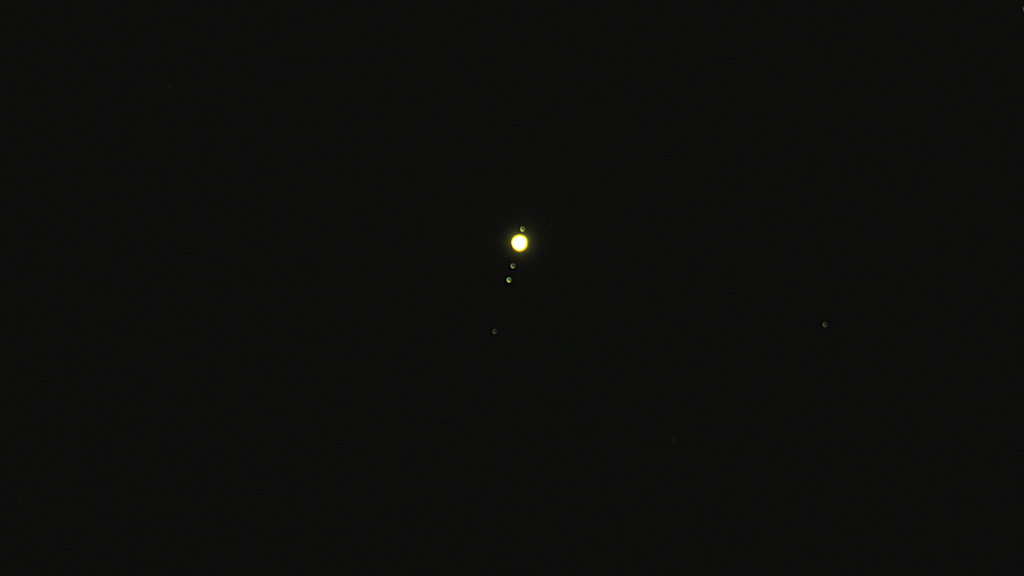
Jupiter was another target during the session. Photographing Jupiter introduced different challenges. Because the planet is so bright compared with its moons, obtaining an exposure that shows both the planet’s cloud bands and its satellites is difficult.
Adjusting the camera to properly expose Jupiter often caused the moons to disappear. Increasing the exposure to reveal the moons caused Jupiter to become overexposed. It is a problem I will continue working on during future planetary observing sessions.
Finishing with the Nebulae
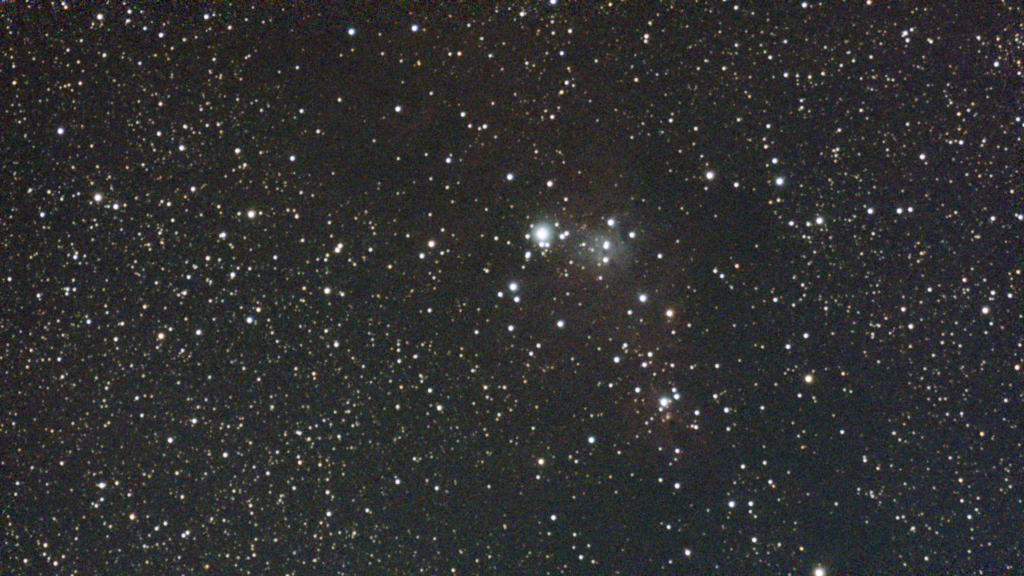
The Christmas Tree Cluster – NGC 2264
Located in the constellation Monoceros, NGC 2264 is an interesting region containing young stars, glowing gas, and dark clouds of dust.
During the session, I began seeing faint reddish nebulosity appear as the telescope collected additional exposures. Watching an astronomical image gradually develop as more frames are stacked is one of the most enjoyable aspects of using a smart telescope.
The Flame Nebula – NGC 2024
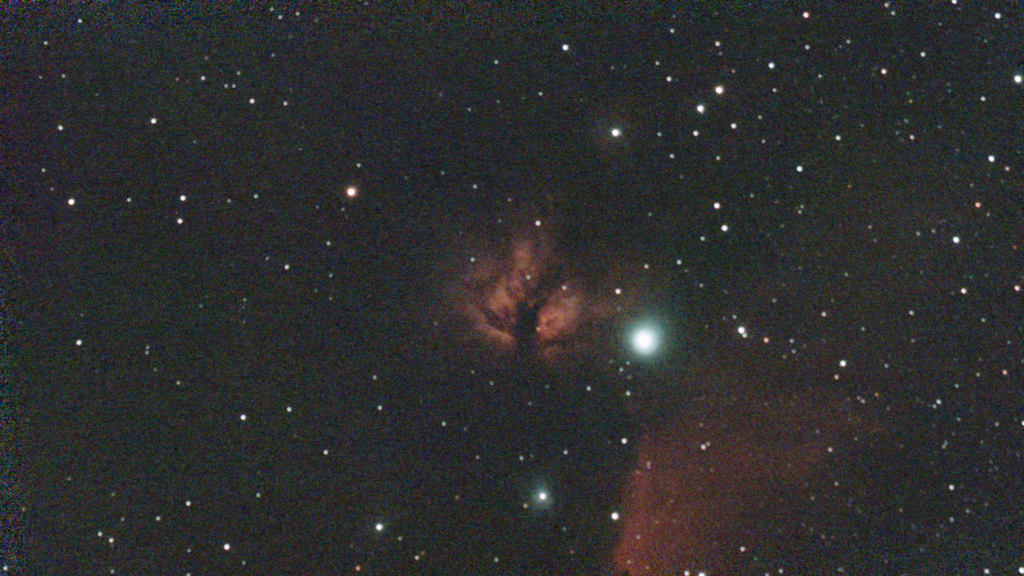
One of my final targets was the Flame Nebula, located near the bright star Alnitak in Orion’s Belt. The Flame Nebula is a region of gas and dust where new stars are forming.
As the telescope continued collecting exposures, the nebula began showing more structure. Despite the challenges of light pollution and limited battery power, I collected 67 frames before ending the session. It was a fitting conclusion to a productive night.
Equipment Challenges and Lessons Learned
Not everything went smoothly. Battery life continues to be one of my biggest limitations. Both the Dwarf telescope and the laptop used for planetary imaging require careful power management.
Light pollution was another challenge. Observing from a residential area in Harford County means working under skies that are far from completely dark. Some targets were partially obstructed by trees, while others required patience as they moved into better positions.
I also learned more about the importance of camera exposure, focus, and magnification when photographing planets. Perhaps the most important lesson was that astronomical photography requires experimentation. A successful image often involves trial and error rather than simply pointing a telescope at an object.
Final Thoughts
By the time I finished, I had photographed or attempted to photograph the Moon, Jupiter, Uranus, Neptune, the California Nebula, the Pleiades, NGC 7331, the Christmas Tree Cluster, and the Flame Nebula.
Not every image was perfect. Some were better than others, and a few presented technical difficulties that I still need to resolve. But that is part of learning astronomy.
One of the things I enjoy most about amateur astronomy is that every observing session presents an opportunity to learn something new. Whether studying lunar geology, examining a distant galaxy, or trying to capture the faint glow of a nebula, there is always another challenge waiting in the night sky.
This session was particularly satisfying because I was able to use two different telescope systems, improve my understanding of planetary photography, and collect a number of images worth sharing.
And perhaps best of all, I was able to explore objects ranging from our nearest celestial neighbor to a galaxy approximately 50 million light-years away, all from my own backyard in Harford County.
Clear skies!
Harford Science — Exploring Astronomy, Geology, and Meteorology in Harford County, Maryland