
Night Sky Objects
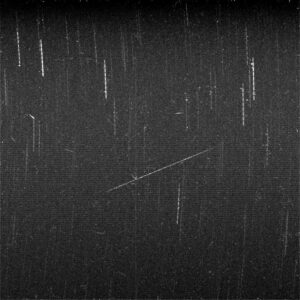
Meteors are streaks of light in the sky produced when a meteoroid—a small piece of space debris, such as a rock or metal fragment—enters the Earth’s atmosphere and burns up due to friction with the air. This bright phenomenon is often referred to as a “shooting star” or “falling star,” although it has nothing to do with actual stars.
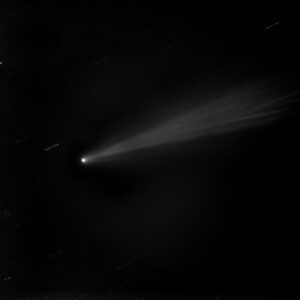
Comets are small celestial bodies composed primarily of ice, dust, and rocky material that orbit the Sun. Often described as “dirty snowballs,” comets originate from the outer regions of the solar system, specifically the Kuiper Belt and the Oort Cloud. When a comet approaches the Sun, it heats up, causing the ice to vaporize and release gas and dust, creating a glowing coma and often a distinctive tail that can stretch for millions of miles.
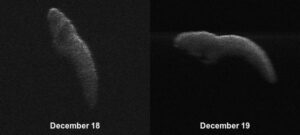
Asteroids are rocky, airless remnants left over from the early formation of the solar system about 4.6 billion years ago. Unlike comets, which are made primarily of ice and dust, asteroids are composed mainly of rock and metal. They vary widely in size, shape, and composition.
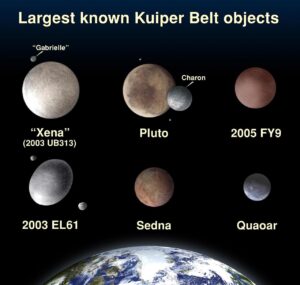
The Kuiper Belt and the Oort Cloud are two distinct regions in our solar system that contain a vast number of small icy bodies, remnants from the early formation of the solar system. These regions are important in understanding the origins of comets and the structure of our solar system
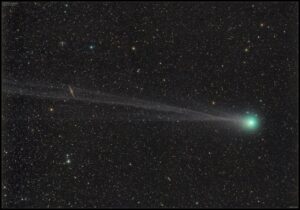
The Oort Cloud is a hypothetical, spherical shell of icy objects that surrounds the entire solar system at distances ranging from about 2,000 to 100,000 AU from the Sun. This makes it the most distant region of our solar system, far beyond the Kuiper Belt and the orbit of the outer planets.
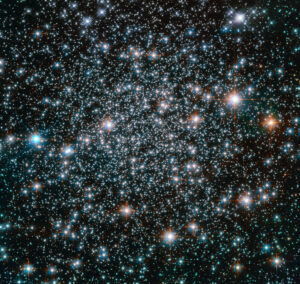
Stars are massive, luminous spheres of plasma held together by gravity. They are the fundamental building blocks of galaxies and the primary sources of light and energy in the universe. Stars are composed mainly of hydrogen and helium, undergoing nuclear fusion in their cores to produce energy, which they radiate as light and heat.
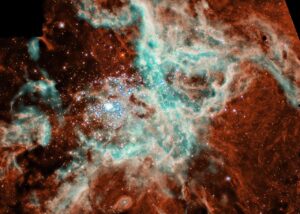
A nebula is a vast cloud of gas and dust in space, often serving as a nursery for new stars. Nebulae are among the most beautiful and intriguing objects in the universe, displaying a wide range of colors and shapes. They play a crucial role in the life cycle of stars, both as birthplaces and as remnants left behind after stars die.
Constellations are patterns of stars visible in the night sky that have been historically identified and named by various cultures. These patterns often resemble animals, mythological creatures, gods, and other figures, and they have been used for navigation, storytelling, and calendrical purposes throughout human history.
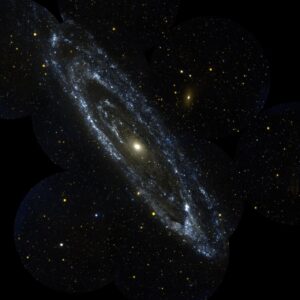
Galaxies are vast collections of stars, gas, dust, and dark matter bound together by gravity. They are the fundamental building blocks of the universe, ranging in size from a few million to over a trillion stars. The study of galaxies provides insight into the structure, formation, and evolution of the universe.