
Mercury
Venus
Earth
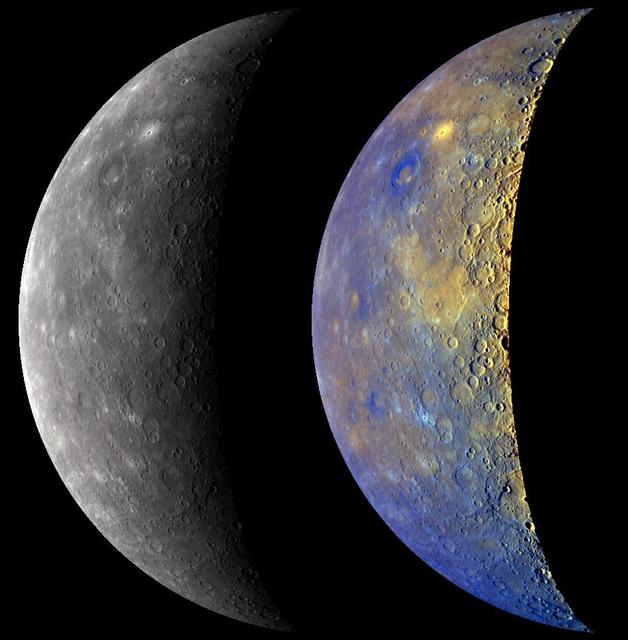
Quick Facts
- Distance from Sun: 57.9 million km
- Diameter: 4,879 km
- Year length: 88 Earth days
- Smallest planet in the solar system
About Mercury
Mercury is the first planet from the Sun and the smallest planet in our solar system. Its surface is heavily cratered from billions of years of impacts.
Mercury has a large iron core, surrounded by a thin mantle and crust composed mainly of basaltic rock.
Two spacecraft have studied Mercury in detail:
- Mariner 10 (1974–1975) performed three flybys.
- MESSENGER orbited the planet from 2011–2015.
A third mission, BepiColombo, is currently traveling to Mercury and is expected to arrive in 2025.
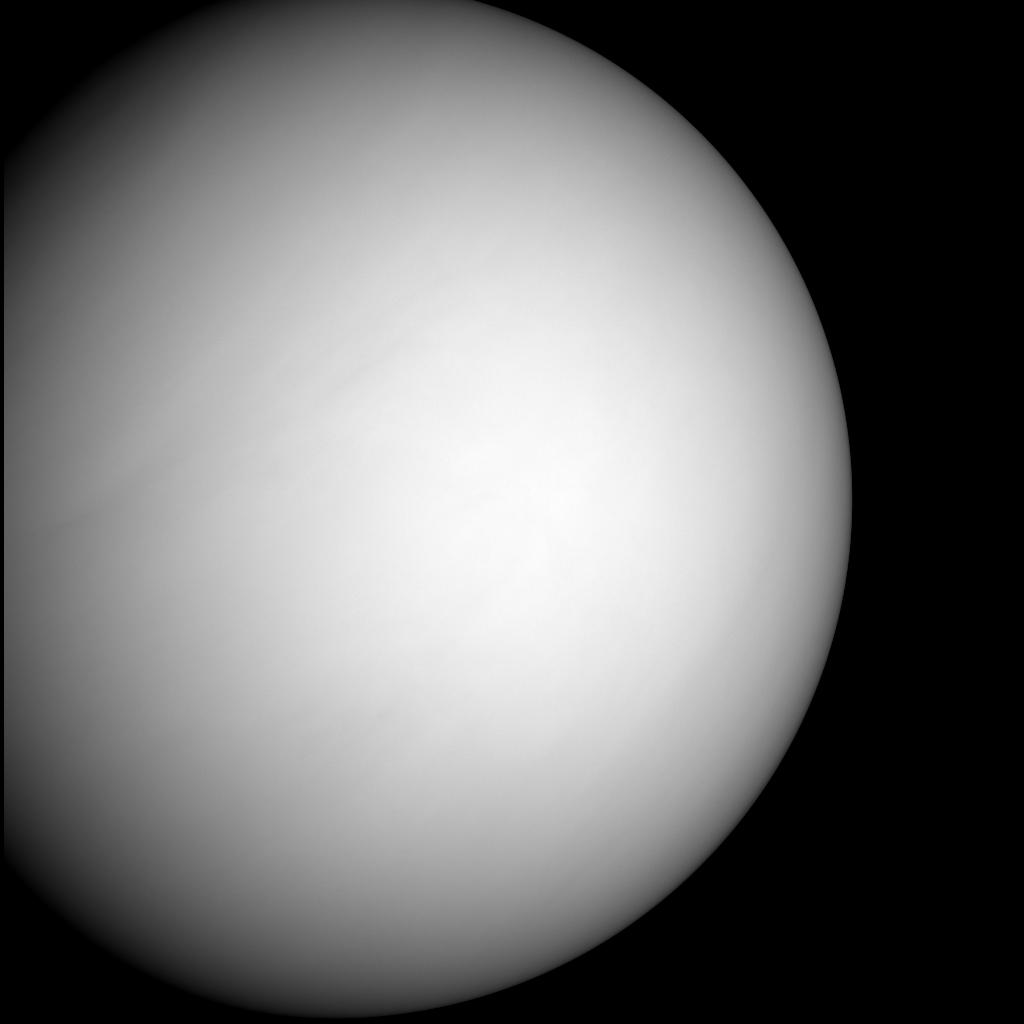
Quick Facts
- Distance from Sun: 108.2 million km
- Diameter: 12,104 km
- Length of year: 225 Earth days
- Surface temperature: ~465°C (869°F)
- Thick atmosphere of carbon dioxide and sulfuric acid clouds
About Venus
Venus is the second planet from the Sun and is often called Earth’s “sister planet” because of its similar size and mass. However, the two planets are very different.
Venus has the hottest surface of any planet in the solar system due to an extreme greenhouse effect. Its thick carbon-dioxide atmosphere traps heat efficiently, raising temperatures high enough to melt lead.
Radar observations show that Venus has volcanoes, lava plains, and deformed crustal regions. Because thick clouds hide the surface, spacecraft use radar to map the planet.
Exploration
- Venera missions (USSR) — first spacecraft to land on Venus
- Magellan (NASA) — mapped the surface with radar
- Akatsuki (Japan) — currently studying the atmosphere
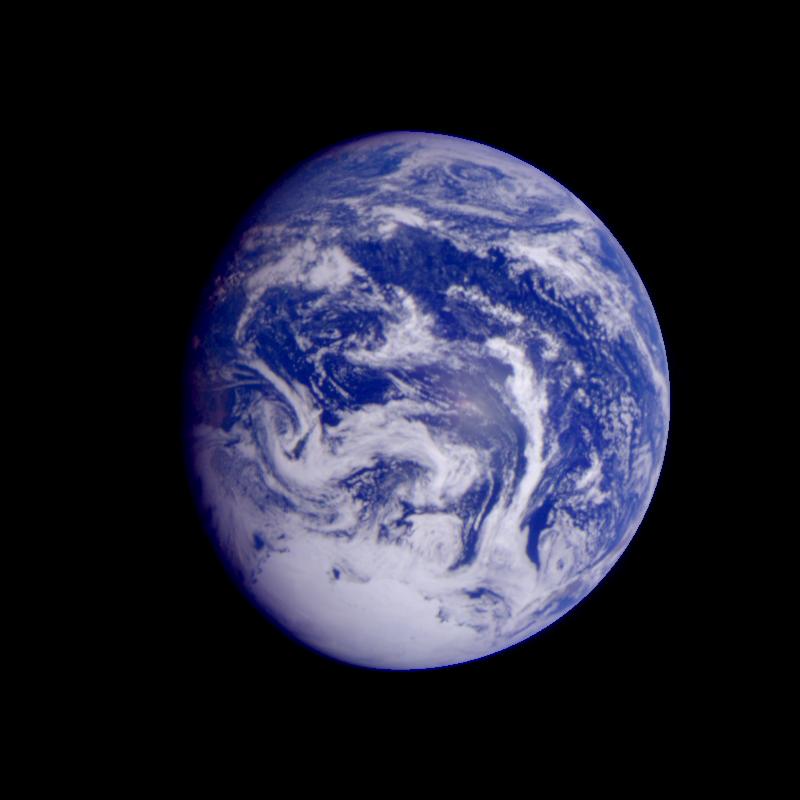
Quick Facts
- Distance from Sun: 149.6 million km
- Diameter: 12,742 km
- Length of year: 365.25 days
- Surface water coverage: ~71%
- Only known planet with life
About Earth
Earth is the third planet from the Sun and the only known world that supports life. Liquid water, a protective atmosphere, and a moderate climate make the planet uniquely habitable.
Earth’s surface is constantly reshaped by plate tectonics, erosion, and volcanic activity. The planet has a layered structure consisting of an iron-nickel core, mantle, and crust.
Earth also has a strong magnetic field generated by motions in its liquid outer core. This magnetic field protects the planet from harmful solar radiation.
Exploration
Earth is extensively studied by satellites that monitor:
land processes
Climate
atmosphere
oceans
Moon
Mars
Asteroid Belt
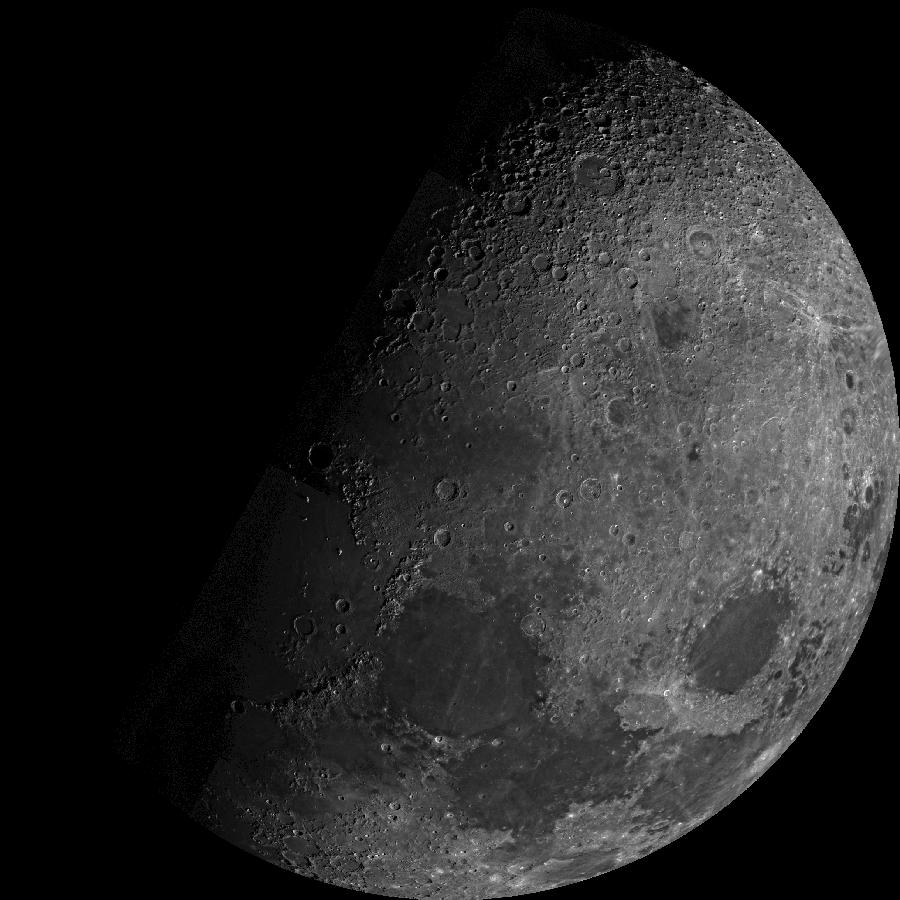
Quick Facts
- Average distance from Earth: 384,400 km
- Diameter: 3,474 km
- Orbital period: 27.3 days
- Surface gravity: ~1/6 of Earth’s
- No atmosphere (technically a very thin exosphere)
About the Moon
The Moon is Earth’s only natural satellite and the fifth largest moon in the solar system. It formed about 4.5 billion years ago, most likely from debris created when a Mars-sized object collided with the early Earth.
The Moon’s surface is covered with impact craters, mountain ranges, and large dark plains called maria, which are ancient lava flows. Because the Moon has no thick atmosphere, these features have remained largely unchanged for billions of years.
The Moon is tidally locked with Earth, meaning the same side always faces us. Its gravitational pull causes ocean tides and helps stabilize Earth’s axial tilt, which contributes to a more stable climate.
Exploration
The Moon is the only celestial body beyond Earth that humans have visited.
- Apollo missions (NASA) — first human landings (1969–1972)
- Luna missions (USSR) — early robotic exploration
- Recent missions (NASA, China, India) are studying the Moon again, especially its polar regions, where water ice has been discovered
Future missions aim to establish a long-term human presence on the Moon.
Quick Facts
- Distance from Sun: 227.9 million km
- Diameter: 6,779 km
- Length of year: 687 Earth days
- Thin atmosphere mostly carbon dioxide
- Home to the largest volcano in the solar system
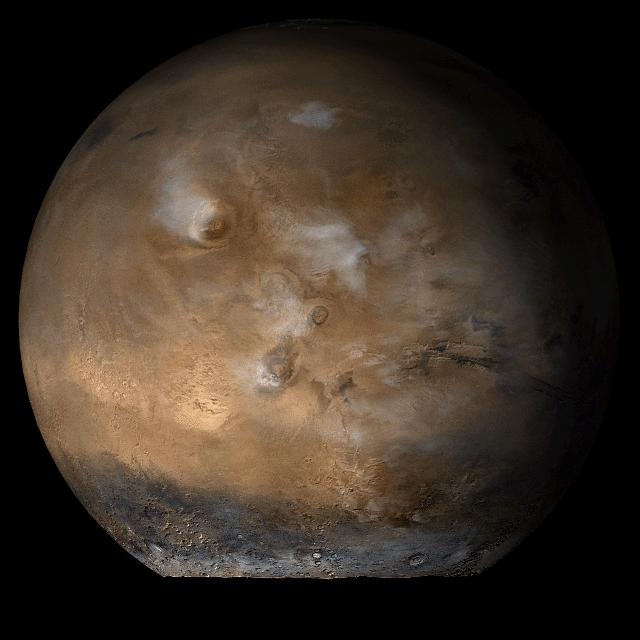
About Mars
Mars is the fourth planet from the Sun and is often called the Red Planet because iron oxide in its soil gives the surface a reddish color.
Mars has large volcanoes, deep valleys, and ancient river channels that suggest liquid water once flowed across its surface. Today, the planet is cold and dry with a thin atmosphere.
The massive volcano Olympus Mons rises about 22 km high, making it the tallest volcano in the solar system.
Exploration
Mars is one of the most explored planets.
Major missions include:
- Viking landers
- Spirit and Opportunity rovers
- Curiosity rover
- Perseverance rover
Scientists continue to search for signs of past microbial life.
Quick Facts
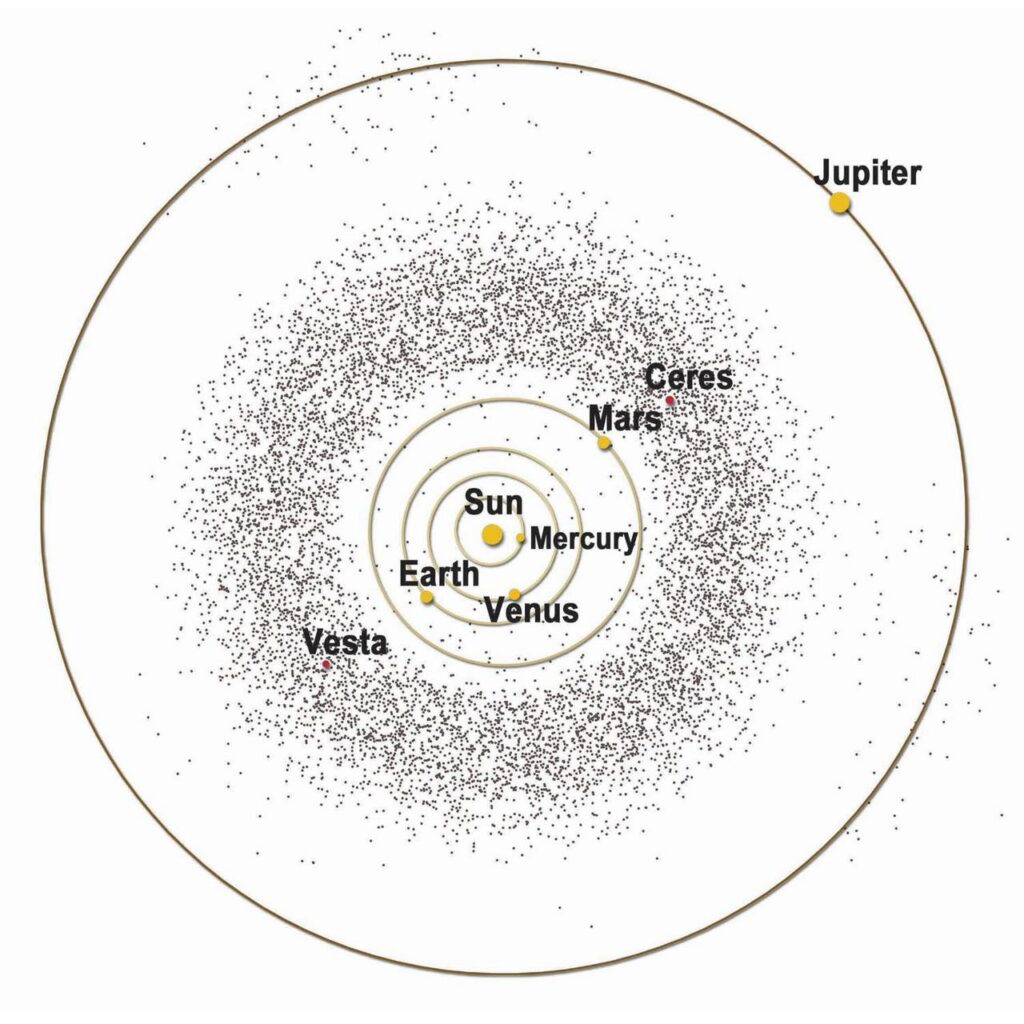
- Location: Between Mars and Jupiter
- Distance from Sun: ~2.2 to 3.2 AU (330–480 million km)
- Composition: Rocky and metallic bodies
- Number of objects: Millions of asteroids
- Largest object: Ceres (a dwarf planet)
About the Asteroid Belt
The Asteroid Belt is a region of the solar system located between Mars and Jupiter that contains millions of rocky and metallic objects called asteroids. These objects are remnants from the early solar system that never formed into a planet.
Although often depicted as crowded, the Asteroid Belt is mostly empty space, and spacecraft can pass through it safely. The strong gravity of Jupiter prevented the material in this region from combining into a larger planet.
Asteroids vary greatly in size—from small rocks to large bodies hundreds of kilometers across. Some are made mostly of metal (iron and nickel), while others are composed of rock or carbon-rich material.
The largest object in the belt, Ceres, is massive enough to be classified as a dwarf planet and even contains evidence of water ice beneath its surface.
Exploration
Several missions have explored the Asteroid Belt:
- Dawn (NASA) — orbited Vesta and Ceres
- Galileo spacecraft — flew past asteroids on its way to Jupiter
- Ongoing studies help scientists understand the early formation of the solar system
Jupiter
Saturn
Uranus
Quick Facts
- Distance from Sun: 778 million km
- Diameter: 142,984 km
- Length of year: 11.9 Earth years
- Largest planet in the solar system
- Has over 90 known moons
About Jupiter
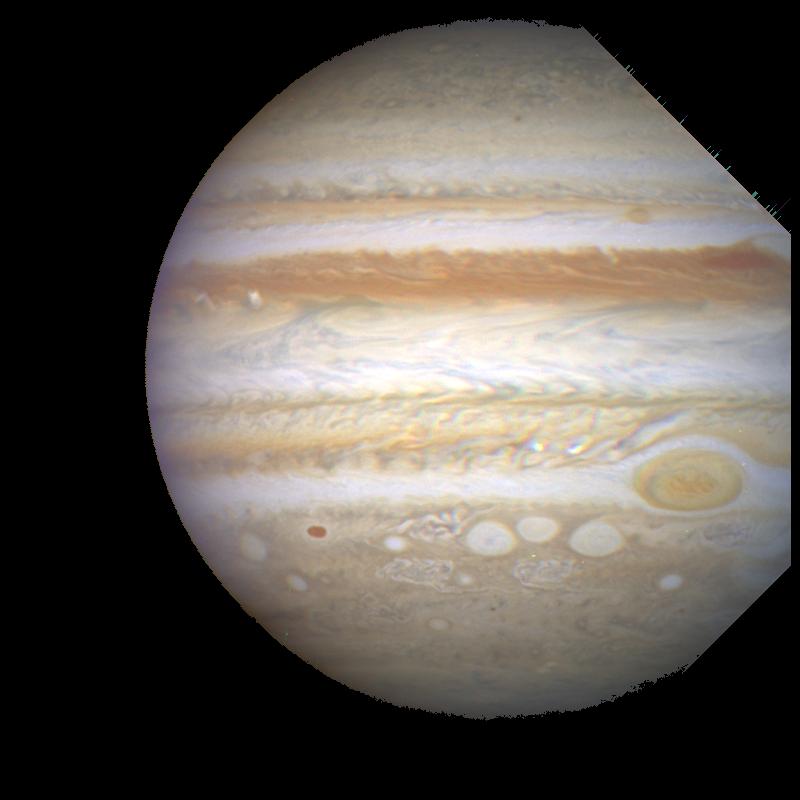
Jupiter is the largest planet in the solar system and is classified as a gas giant. It is composed mostly of hydrogen and helium.
The planet is famous for the Great Red Spot, a massive storm that has been raging for over 300 years.
Jupiter’s powerful gravity influences the orbits of many objects in the solar system and may help shield inner planets from some comets.
Exploration
Major missions include:
- Pioneer 10 and 11
- Voyager missions
- Galileo orbiter
- Juno spacecraft (currently studying Jupiter)
Quick Facts
- Distance from Sun: 1.43 billion km
- Diameter: 120,536 km
- Length of year: 29.5 Earth years
- Famous for its spectacular ring system
- Has over 140 moons
About Saturn
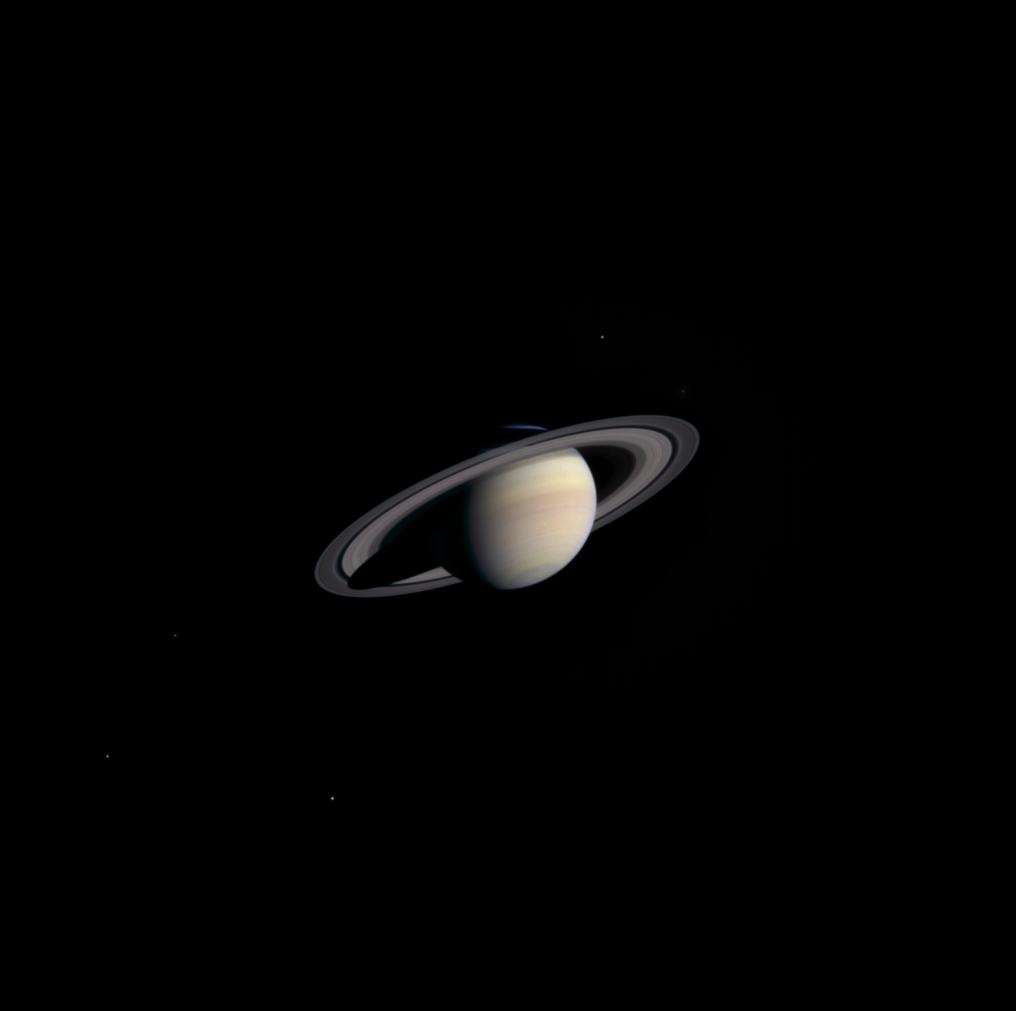
Saturn is the second-largest planet in the solar system and another gas giant. It is best known for its bright ring system, composed mainly of ice particles and rocky debris.
Saturn has many interesting moons, including Titan, which has lakes and rivers of liquid methane.
Exploration
- Voyager flybys
- Cassini spacecraft (2004–2017) studied Saturn and its moons in de
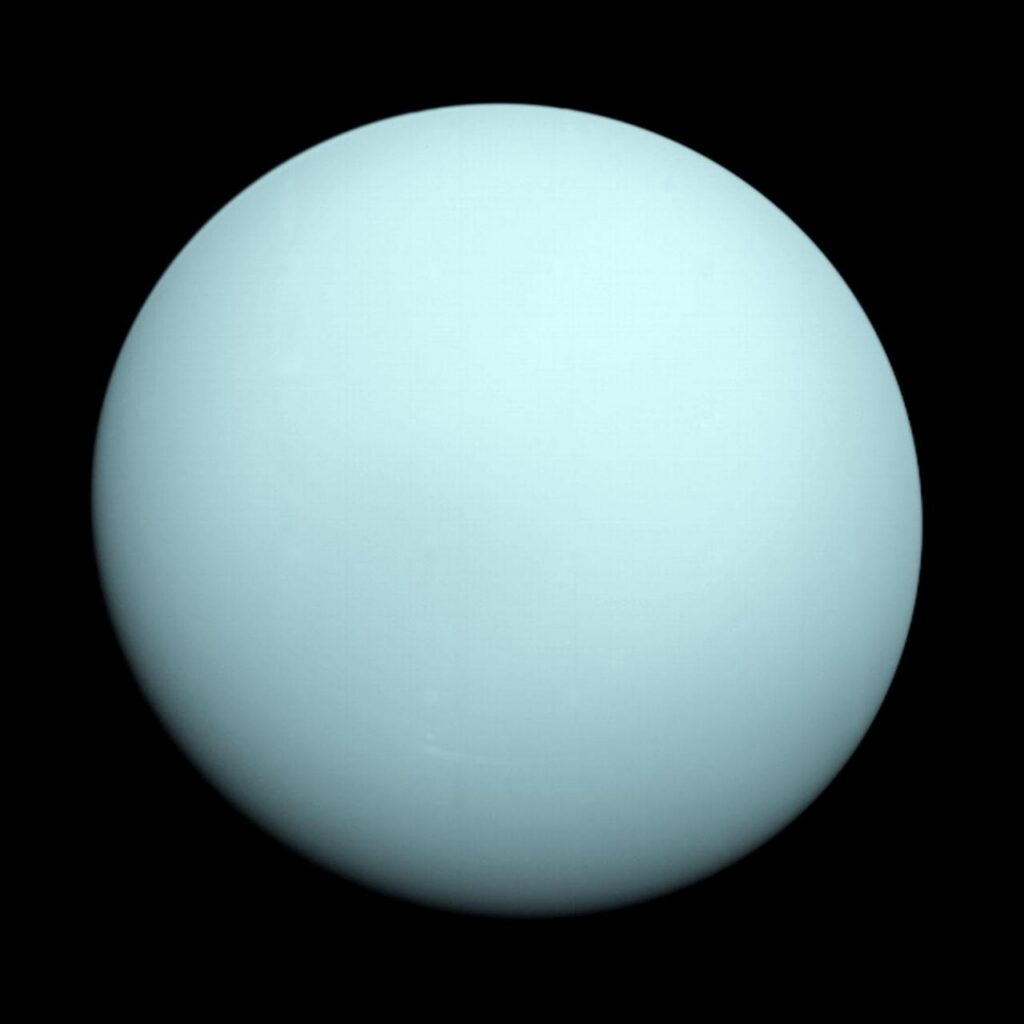
Quick Facts
- Distance from Sun: 2.87 billion km
- Diameter: 50,724 km
- Length of year: 84 Earth years
- Rotates on its side (tilt of 98°)
- Classified as an ice giant
About Uranus
Uranus is unique because it rotates nearly on its side, possibly due to a massive collision early in its history. This causes extreme seasonal variations.
The planet appears blue because methane in the atmosphere absorbs red light and reflects blue wavelengths.
Uranus has faint rings and numerous small moons.
Exploration
- Voyager 2 is the only spacecraft to visit Uranus (1986 flyby)
Neptune
Pluto
Sun
Quick Facts
- Distance from Sun: 4.5 billion km
- Diameter: 49,244 km
- Length of year: 165 Earth years
- Strongest winds in the solar system
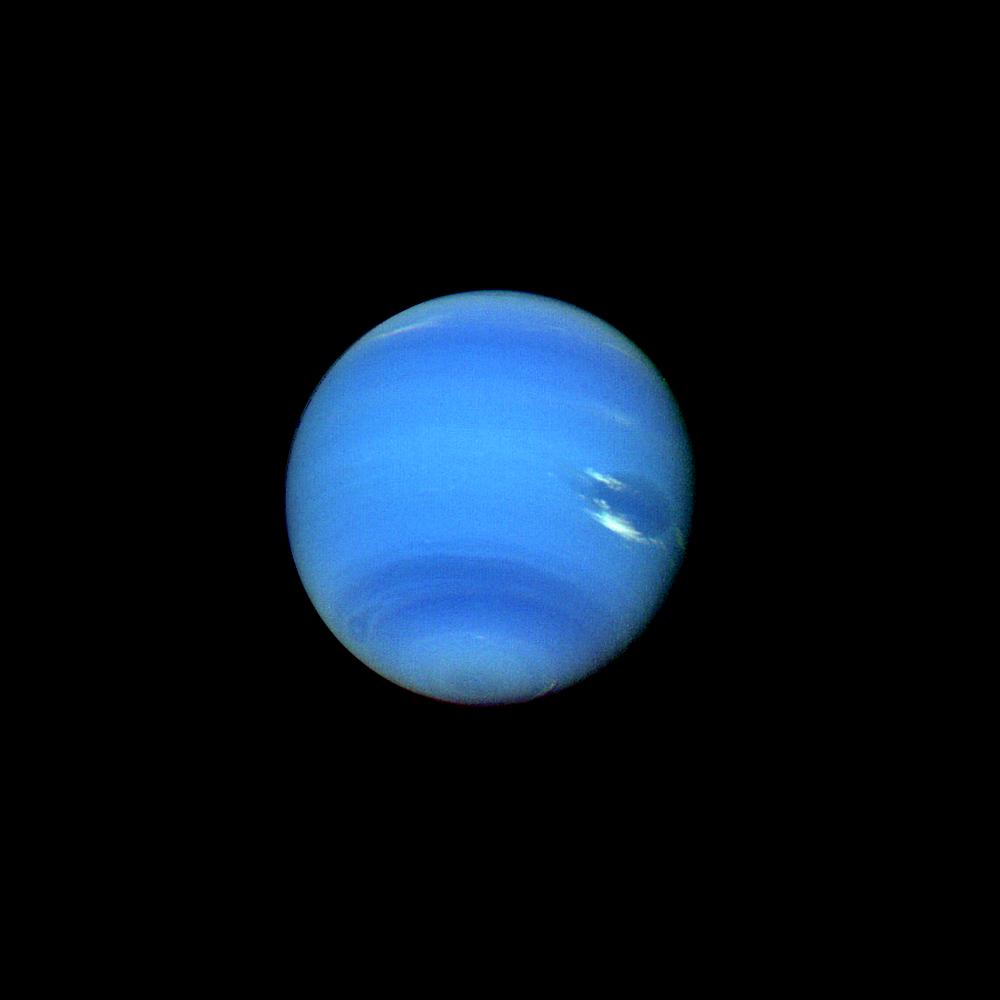
- Deep blue color from methane in the atmosphere
About Neptune
Neptune is the eighth and most distant major planet from the Sun. It is another ice giant similar to Uranus.
Neptune’s atmosphere contains powerful storms and extremely fast winds that can exceed 2,000 km/h (1,200 mph).
The planet’s largest moon, Triton, likely formed elsewhere and was captured by Neptune’s gravity.
Exploration
- Voyager 2 flyby in 1989
- Future missions are being planned to study Neptune and Triton.
Quick Facts
- Distance from Sun: ~5.9 billion km (average)
- Diameter: 2,377 km
- Length of year: 248 Earth years
- Classification: Dwarf planet
- Has 5 known moons (largest is Charon)
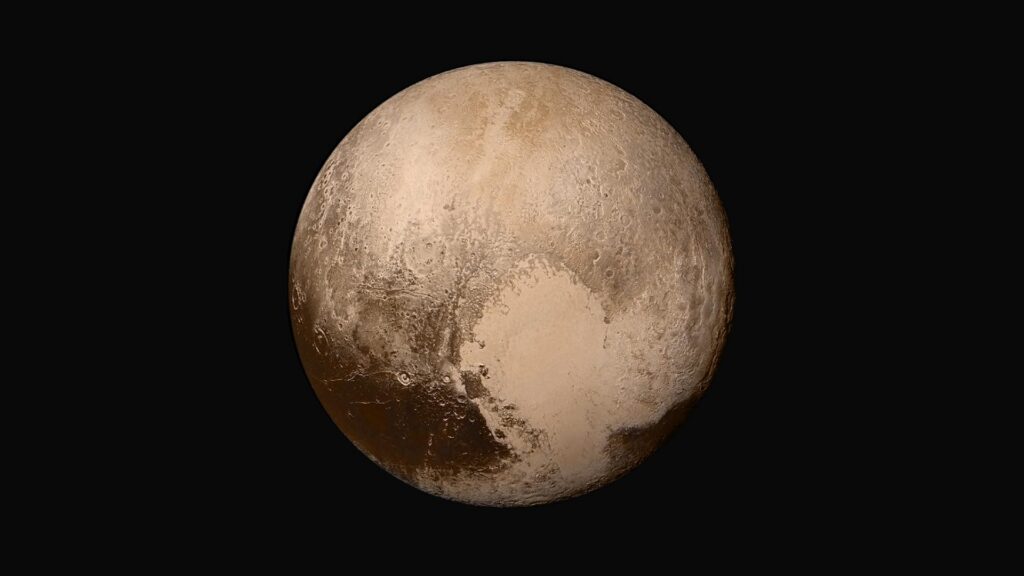
About Pluto
Pluto is a dwarf planet located in the outer regions of the solar system in an area called the Kuiper Belt, a region filled with icy bodies beyond Neptune.
Discovered in 1930, Pluto was originally classified as the ninth planet. In 2006, it was reclassified as a dwarf planet because it does not clear its orbital neighborhood of other objects.
Pluto is composed mostly of ice and rock and has a surprisingly complex surface. Images from spacecraft show mountains made of water ice, frozen plains of nitrogen ice, and possible cryovolcanoes.
Pluto’s largest moon, Charon, is so large relative to Pluto that the two are sometimes considered a binary system, orbiting a common center of gravity.
Exploration
- New Horizons (NASA) — first spacecraft to visit Pluto (2015 flyby)
- Provided detailed images and data about Pluto’s surface, atmosphere, and moons
Quick Facts
- Type: G-type main-sequence star (G2V)
- Diameter: ~1.39 million km
- Distance from Earth: 149.6 million km (1 AU)
- Surface temperature: ~5,500°C (9,932°F)
- Core temperature: ~15 million°C
- Contains 99.8% of the solar system’s mass
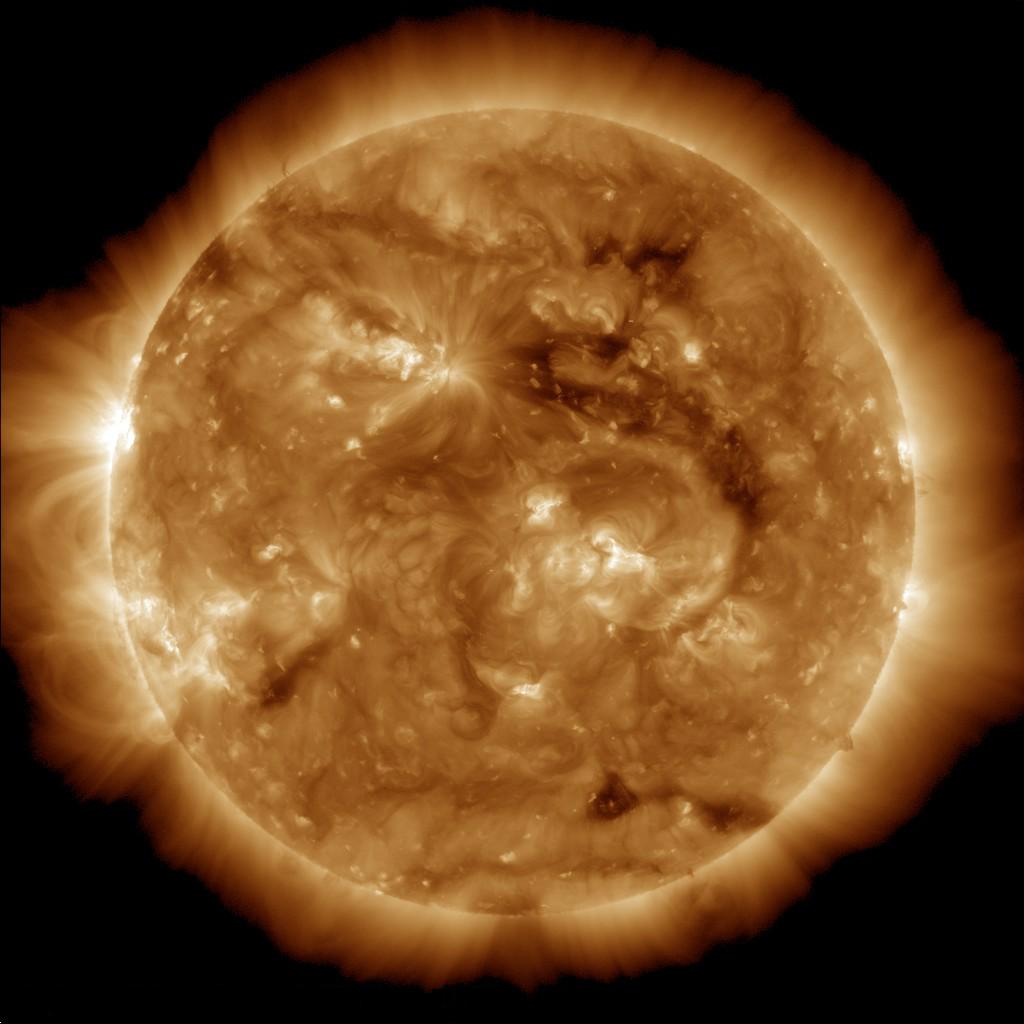
About the Sun
The Sun is the central star of our solar system and the source of nearly all the energy that supports life on Earth. It is a massive sphere of hot plasma composed mainly of hydrogen and helium.
Energy in the Sun is produced through nuclear fusion in its core, where hydrogen atoms combine to form helium, releasing enormous amounts of energy. This energy travels outward and is emitted as light and heat.
The Sun has several layers, including the core, radiative zone, convective zone, photosphere, chromosphere, and corona. The visible surface, called the photosphere, is where sunlight is emitted.
The Sun is also highly active, producing phenomena such as:
- Sunspots
- Solar flares
- Coronal mass ejections (CMEs)
These events can affect space weather and impact Earth’s technology.
Exploration
The Sun is studied by many spacecraft, including:
- Parker Solar Probe (NASA) — traveling closer to the Sun than any spacecraft before
- Solar and Heliospheric Observatory (SOHO) — studies solar activity
- Solar Dynamics Observatory (SDO) — provides detailed images of the Sun